Part One: Self Improvement from the Inside Out
Do you want to make your life better? Are you struggling in your personal or professional life, your interactions with other people, your life balance, or your life’s purpose? Have you made attempts to fix these issues — from workshops to self-help books to counseling — with little or no success?
The 7 Habits of Highly Effective People endorses an inside-out approach to improving yourself and your life. This method starts with examining and adjusting your character, your motives, and how you see the world; only when you start from the foundation of your character and your worldview can you make lasting behavioral changes.
This inside-out approach entails
- Making improvements to your character before your personality
- Focusing on principles before practices
- Adjusting your paradigms, or how you see the world, in order to change your actions
- Improving yourself (achieving so-called “private victories”) before you can build better relationships with others (“public victories”)
Character is the Foundation for Personality and Behavior
There are two approaches to self-improvement: Character Ethic and Personality Ethic.
Character Ethic focuses on foundational traits, including integrity, humility, hard work, loyalty, self-control, courage, justice, patience, modesty, and morality. These are basic principles that any person — in any culture or time period — could agree are important.
In the first 150 years or so of this country’s existence, most publications about how to be successful used a Character Ethic approach.
Personality Ethic emphasizes skills and practices that affect your public image, attitudes, and behaviors. This approach offers quick-fix solutions — how to be more charming, have a more positive outlook, make people like you, and influence people to do what you want. However, these solutions generally only work temporarily, while the underlying problem remains and ultimately resurfaces.
After World War I, success literature largely shifted focus from Character Ethic to Personality Ethic.
Character Ethic addresses primary traits, while Personality Ethic encompasses secondary traits, like communication skills, interpersonal strategies, and positive thinking. These techniques are often essential for success, but they are flimsy and ineffective if they’re not based in character that supports them; you must start with the foundation. For example, if you try to use communication skills to make people trust you, but your character is not honest and trustworthy, the effects will be hollow and eventually people will see through the act.
In one-time or short-term scenarios, you may be able to get by on personality alone. But without the foundation of primary traits — Character Ethic — the secondary traits will never have a lasting impact.
Working on personality improvements without first establishing the necessary character traits would be like a farmer trying to fit all her work into one season. If the farmer skips planting in the spring and neglects to water and nurture the buds all summer, then tries to plant, water, and harvest in the fall, it won’t work. You can’t shortcut the process.
Paradigms Dictate How You See the World
At the root of your beliefs and behaviors are a collection of paradigms, which are influenced by your family, education, work, religion, friends, and culture. A paradigm is essentially the lens through which you see the world. Your paradigms shape how you interpret the world, and your interpretation governs how you behave; thus, changing the lens we use changes our behavior.
Think of a paradigm as a map: A map is not the place itself, it is simply a representation of it. Some maps highlight topographical features, others show streets and landmarks, while others display population and demographic information — they’re all representing the same place through different lenses.
Having an ineffective paradigm is like trying to use a map of Detroit to navigate Chicago. No matter how hard you work at it, you’ll still be lost. You will only start to make real progress when you correct your paradigm and are working with the right map.
We all have many paradigms that influence how we interpret the world. (For example, Character Ethic and Personality Ethic are examples of social paradigms.) There are two types of paradigms: Paradigms that help us interpret the way things should be shape our values, while paradigms that help us interpret the way things are shape our realities.
Each person’s experiences creates different paradigms, so two people with different paradigms can look at the same facts, interpret them completely differently, and both be right.
For example, there is a well-known optical illusion titled “My Wife and My Mother-in-Law.” It is a drawing that can be viewed as the face of a young woman looking away or as the profile of an old woman’s face. Say you first see the young woman, and then someone points out the older woman; if you avert your eyes and then look back, you are likely to still see the young woman first because your initial impression conditioned how you see the drawing.
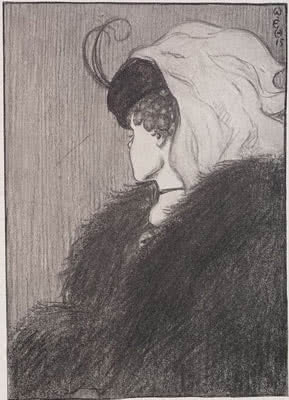
Paradigms also work this way: A lifetime of conditioning frames your perceptions and behaviors, and only with persistent, deliberate effort can you shift your paradigms. But first, you have to recognize that you have these paradigms and understand how they’re affecting your behavior.
We are so accustomed to our paradigms that we seldom even realize we have them, let alone question their accuracy. If you spent your whole life with nearsighted vision and never put on glasses to correct it, would you realize anything was wrong?
Rather than question our own views, when other people’s paradigms cause them to interpret something differently than we do, we typically assume they’re wrong. When you become aware of your paradigms, you can begin to examine and question them, and acknowledge that other people’s beliefs and behaviors are shaped by their own paradigms. Evaluating your paradigms helps you become more open-minded to others’ perceptions, and ultimately expand your own view of the world.
Center Your Paradigms in Principles
Despite how your personal paradigms cause you to interpret the world, there are indisputable principles that are part of reality — including fairness, integrity, honesty, human dignity, potential, growth, and patience. Put simply, your paradigms determine your values and behavior, which you can control, but principles determine the consequences of your behavior, which are beyond your control.
Principles are universally recognized, across cultures and languages and generations. You can tell that a principle is fundamental and self-evident because the prospect of following its opposite (e.g. living dishonestly or without dignity) seems ridiculous.
Sometimes we run up against these unalterable principles, and that forces your paradigm to shift. To illustrate this, consider the story of a battleship that was passing through patchy fog as night fell. A crew member was looking out for ships and other objects when he saw a light approaching. He alerted the captain, who told the crew member to signal that the source of the light, presumably another ship, change course to avoid collision. A signal came back advising the battleship to change course; again, the captain insisted the other side change course. This went back and forth as the captain got increasingly frustrated, until the battleship received a signal that the source of the light was a lighthouse. Chagrined, the battleship crew had to change its course.
Principles are different from practices; a principle is a fundamental truth while a practice is an action that is applicable to specific situations. However, principles can be dictate deeply held habits — like a habit of being fair, honest, or patient — and those habits can determine the practices you use to approach different situations. The more your paradigms, habits, and practices align with principles, the more smoothly and effectively you can move through life.
A Paradigm Shift Can Change Your World
Changing your paradigm brings powerful, dramatic change because it introduces a whole new way of thinking. This inevitably leads to a change in attitudes, behaviors, and relationships.
Thomas Kuhn introduced the term “paradigm shift” to describe major scientific breakthroughs in his book, The Structure of Scientific Revolutions. In all areas of life, paradigm shifts have shaped history.
- Copernicus’s claim that the planets revolved around the sun was a paradigm shift from the belief that the earth was the center of the universe.
- Before scientists developed the germ theory, large numbers of women and babies were dying during childbirth and more soldiers died from infections in minor wounds than major battlefield traumas. But the concept that germs existed — a paradigm shift — led to drastic improvements in medical outcomes.
- The creation of democracy was a paradigm shift from the long-held tradition of monarchies. This radical change created an entirely different way of forming and regulating government.
A paradigm shift doesn’t always change things for the better; for example, the progression from Character Ethic to Personality Ethic was a paradigm shift that moved to emphasize quick fixes over foundational improvements.
Paradigms can change quickly — through life-altering experiences — or gradually.
For example, Covey was on a New York City subway one Sunday morning, and all the passengers in the train car were quiet and calm until a man and his children boarded. The loud and unruly children irritated passengers and changed the atmosphere in the car, while the man sat and did nothing. Covey eventually asked the man to try to control his children, and the man replied that they were coming from the hospital where the children’s mother had just died; the man said he was at a loss, and the children didn’t know how to handle grief either. That insight caused an instant paradigm shift for Covey, whose irritation was replaced with sympathy.
On the other hand, Covey tells the story of when he and his wife were concerned about their son, who was struggling academically, socially, and athletically. They encouraged him to keep trying, reinforced his successes, and assured him that things would get better — but things weren’t getting better.
Eventually Covey and his wife realized that behind all their encouragement, they saw their son as inadequate: They were comparing him to social and cultural standards, which caused them to view his actions as shortcomings, rather than accepting and celebrating him for his unique talents and assets. Trying to encourage their son in these ways and attempting to protect him from feeling failure and social ridicule was actually sending the message that who he was wasn’t good enough.
To correct their course, Covey and his wife began to give their son more space to face challenges but also to get through them on his own, to step into his own identity, to develop self-worth and gain confidence. Soon their son began to excel where he had previously struggled: academically, socially, and athletically. Covey and his wife made a slow and deliberate paradigm shift, which also shifted how their son saw himself. They speculate that their son’s newfound successes stemmed from his improved self-image and self-confidence.
Making Real Change is a Process
In the process of change, no step can be skipped — just as a child must learn to first crawl, then walk, then run. We tend to understand this more easily in a physical context, but it’s also true in emotional, interpersonal and personal growth.
The problem with self-improvement through the Personality Ethic alone is that it attempts to make a good impression but shortcuts real personal growth by skipping the change in character. Such shortcuts are not worth the trouble, because you waste time and effort on a result that has no substance and produces short-term results.
For example, if you’re a novice tennis player and try playing with pros, you may temporarily deceive others (and even yourself) into thinking you’re better than you are, but ultimately people will see through the ruse. The most effective way to make real change is to truthfully acknowledge your skill level and work to improve it incrementally.
Sometimes business executives attempt to shortcut progress with external changes — making mergers and acquisitions, implementing new workflows, mandating workshops — when the issue is in the company’s structure or culture.
Often, the way we frame a problem is the problem: If we are concerned with the symptoms instead of the underlying cause, this misdiagnosis contributes to (or, at best, does nothing to resolve) the real issue. This is the same way the Personality Ethic leads us to believe that a problem and its solution lie in the superficial realm.
- Example 1: You are a business executive or manager and try to treat your employees well, but you suspect they are not loyal and would slack off if you were out for the day. The problem may not be your employees, but your attitude about them. Do you truly have their best interest at heart? Or do you treat them as assets more than people, and perhaps they pick up on that and behave accordingly?
- Example 2: You are constantly moving and working but feel there are never enough hours in the day; you’ve tried to improve your time management and efficiency, but you still don’t feel you’re living a happy, balanced life. The problem may not be the amount of work you’re getting done or the time it takes you to do it, but rather a paradigm that’s affecting how you view your time, life, and priorities.
- Example 3: Your marriage feels like it’s lost its luster, and counseling and other efforts aren’t doing much to stoke the fire. Maybe the problem isn’t your spouse or your marriage. Maybe the problem is your views and expectations of love and a healthy marriage.
In relationships, you can shortcut real change and improvement by “borrowing strength” to force a superficial change; you may do this by flexing your authority, knowledge, experience, or physical size and strength. Borrowing strength to force change actually breeds weakness in multiple ways.
- First, it weakens the power of the borrower by making her dependent on these external symbols of supposed strength.
- Second, it weakens the other person by robbing him of the opportunity to have a genuine exchange and come to a mutually agreeable result.
- Third, it weakens the relationship by using fear and coercion in place of cooperation.
Covey tells a story of when he borrowed strength by forcing his three-year old daughter to share her new toys with friends at her birthday party. He first asked her to share, then tried reasoning with her, then bribed her with a treat, and finally threatened her with punishment; she refused each time. Feeling embarrassed at his daughter’s behavior as the other children’s parents watched, Covey forcibly grabbed the toys and handed them to the other children.
Covey had borrowed strength from his size and authority to force his daughter to share her toys. He understood in retrospect that, at her age and maturity level, she needed the emotional space to feel she had true possession and ownership of the toys before she could willingly share them. It would have been more valuable to their relationship if he had considered that insight and diverted the other children’s attention to other toys and games to give his daughter the emotional space she needed.